Our ‘dash’

This was a Word Doc drafted in November last year! Not much use there is it? Time for a tidy up and airing… Right, copy/paste was the easy bit! What does slow me down, even grind me to a halt, however, is all the necessary permissions you have to acquire for any pics/vids/links/quotes etc you want to use…

So to ‘OUR DASH’… What’s this about then?

We’re all familiar with ‘Born XXXX’ and ‘Died XXXX’ but do we ever reflect about the line that separates these two dates? The ‘dash’?

Linda Ellis wrote a poem of this title and says that what matters most is, not ‘when’ we arrive in this world or ‘when’ we leave this body of ours but what we do with the bit in between, our ‘dash’…

So this simple symbol takes on a whole new meaning! It’s a subject that could be expounded at great length but I’d like to explore the ‘dash’ literally. How is it that the happiest people on our planet tend to live more simple lives without ‘dashing’ around or getting caught up in the so-called ‘Rat Race’? Life is meant to be enjoyed, savoured slowly, like a delicious meal and even that activity should mean focusing on each mouthful, ideally not distracted by conversation. It shouldn’t have to be bolted between assignments or munched ‘on the hoof’!
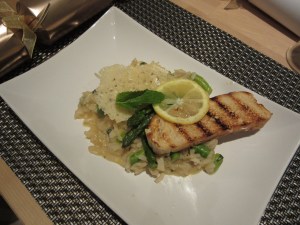
A festive starter from Chris Newberry!

It’s at this precise juncture… as I type these words… that something strange happens. More anon! We also have to nurture an attitude of thankfulness and gratitude and, by so doing, attract more of the same.

To quote Robert Brault… and this is his, not that of Kurt Vonnegut:

“Enjoy the little things, for one day you may look back and realize they were the big things.”

Too many folk nowadays spend their lives rushing headlong from one frantic event/thing they ‘have to do’ to another, from the time they’re blasted awake each morning to when they crash out late into the evening…

And it was at the point mentioned above, that the hour plus of, as yet unfamiliar, Estas Tonne music that I’m playing in the background… er no, not just while I’ve been typing this… hit upon a lyrical section. Pssst… He’s an awesome guitarist btw. Okay, okay, the timing was not absolutely spot on but this piece had already been planned out in my mind, so The Universe knew what was coming next and obliged with these opening words from Estas’ song:

“We’re living our lives so fast. We don’t have a moment to stop… There is so much beauty around yet we don’t have time for it.”

A bit further on, he sings:

“We’re rushing. We’re rushing to die.”

Impressive, huh? Now THAT’S what I call synchronicity!! There’s no way I could ever have envisioned such a scenario, where 99% instrumental music would ‘tune in’ to my writing with words that would mirror what I was about to write. Now maybe if I’d have typed just a little faster…??!

To return… Am reminded of a beautiful poem by R.S. Thomas called ‘The Bright Field’


‘I have seen the sun break through

to illuminate a small field

for a while, and gone my way

and forgotten it. But that was the pearl

of great price, the one field that had

the treasure in it. I realise now

that I must give all that I have

to possess it. Life is not hurrying


on to a receding future, nor hankering after

an imagined past.’

003

Salters Lane, Winchester


I have Facebook friends who have either been diagnosed with cancer or who have relatives with the dis-ease and who, with determination, positive attitude and much loving, supportive advice from others (and I might add, avoiding the ‘chemo’ and radiotherapy routes as well as the W.C.B… The White Coat Brigade) are beginning to turn things around. It takes your life being threatened in this way to appreciate the simplest things but why wait till then? We can have this NOW. Now, NOW!

Again I’m going to quote from a poem, a poignant one titled ‘Chemotherapy’ penned by Julia Darling… not that I advocate this form of treatment as it totally buggers up your immune system… and I mean totally…


‘…I never thought life could get this small,

that I would care so much about a cup,

the taste of tea, the texture of a shawl,

and whether or not I should get up.

I’m not unhappy. I have learnt to drift

and sip. The smallest things are gifts.’


Some wonderful lines here…

There’s a theme running through these meanderings of mine: Of not waiting till life grabs us by the scruff to appreciate even just the gift of another 24 hours. Do you really know whether you’ll be cleaning your teeth for the last time today? I sometimes… should be often(!)… run through a list of things to be grateful for, saying them out loud. I can start with my sight, my hearing, my health, food on a table, warmth and shelter (even though I live in a rented room), the love between my children and I, my friends… dozens and dozens of things…

Yes, there is much to grumble about and some truly sinister world ‘goingonery’ but I try to keep life in perspective and not focus too much on the negative or I just attract more of the same.

Stay in tune, folks! Byeee….


COPYRIGHT FOR IMAGES/POETRY:

The quote by Robert Brault is freely available.

The 2 photos are courtesy of myself, Cassandra Scott.

Extract from ‘Chemotherapy’ by Julia Darling taken from the anthology ‘Being Alive’ published by Bloodaxe Books.  This excerpt falls within the ‘free press’ allowance.
Water Crystals

This is an unusual topic: that of water crystals and a certain scientist called Dr Masaru Emoto.  While a few of you might prick up your ears at this point, I’m addressing the rest of you who are about to move your cursor to that cross in the corner!  Well DDI.  (Don’t Do It!)

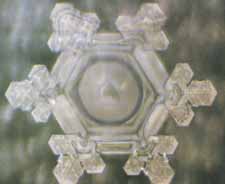
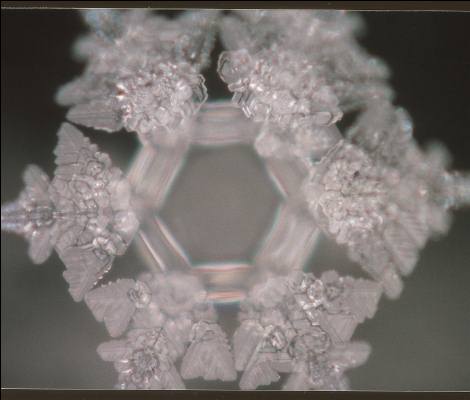
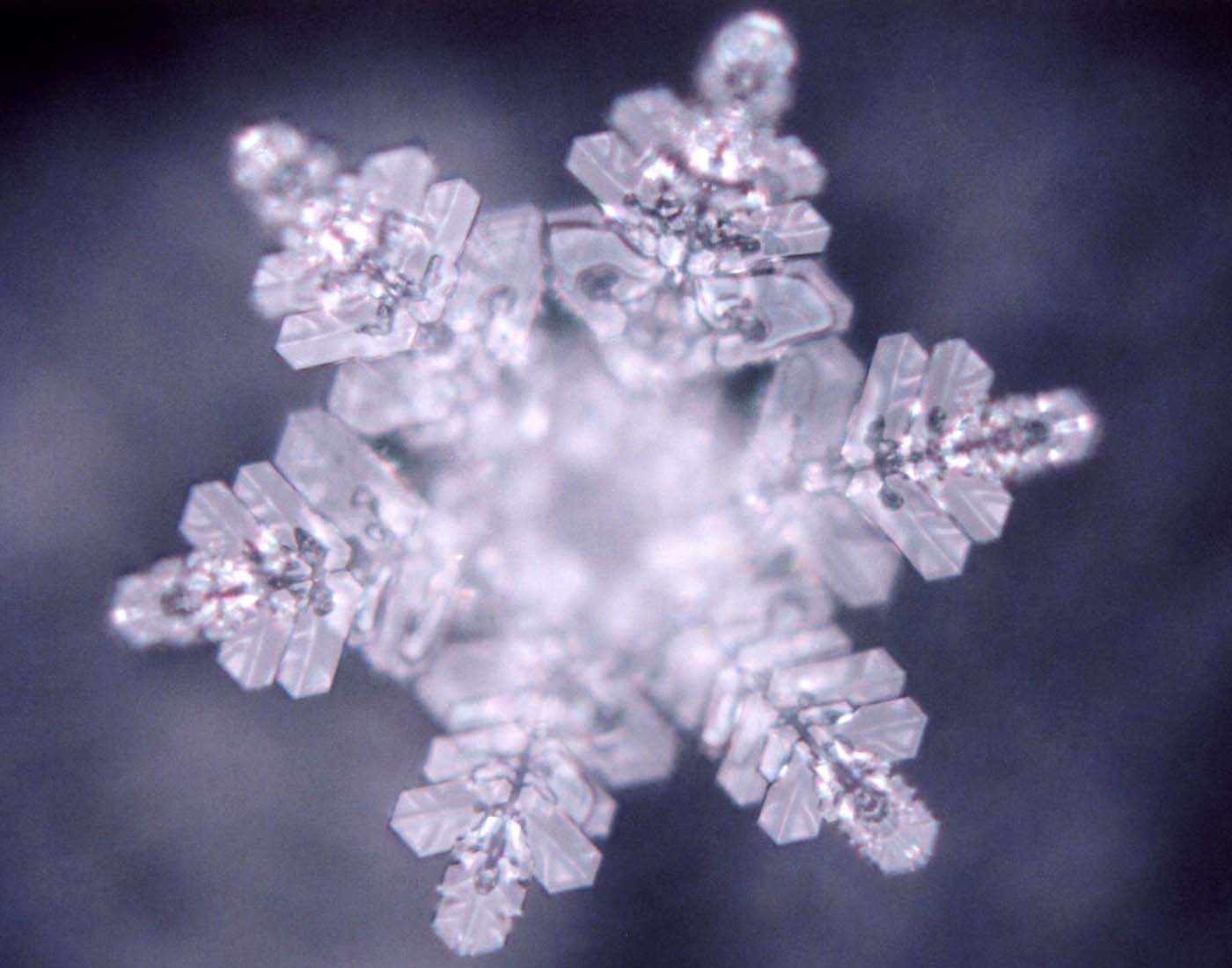
So what d’you know about water crystals then?  Do you realise how extraordinarily beautiful they are?  Like snowflakes, no two are the same.  Invariably six-sided they parade in infinite variety.  Some seem formed from fern fronds caught in the deepest frost and are as detailed as those in nature; some have crystal clumps at each hexagon point; others are more geometric with solid columns and regular shapes but most can best be described as clusters of the most exquisitely cut diamonds radiating from a hexagon or contained within it.

We can’t imagine how problematical it was for Dr Emoto to produce and photograph ice crystals.  I mean they don’t hang around while you fiddle with your lens.

Crystals can only say ‘cheese’ for 20 or 30 seconds at most before turning to slush. 

Crystals can’t speak of course but they can speak to us and we’ll see later that water can even listen and read!  Bear with me.

Anyway, within a few years, Masaru had perfected a system of producing crystals which necessitated a walk-in fridge.  This was kept at a temperature of -5 degrees Celsius.  He used water from different sources from all over the world: water from the South Pole, water from the Columbia Glacier in Canada, tap water from cities such as Sydney, Vancouver, London, Paris, Buenos Aires, and even the spring water from Lourdes, to list but a few.  He wasn’t surprised to find that water from natural sources such as underground streams would always produce complete crystals.  Tokyo tap water, though, was a disappointment… I mean, millions of his colleagues drink the stuff… its composition changed by those ‘health and safety’ chaps who’d added chlorine to it, so no crystals showed up at all.  Rather surprisingly, New York tap water formed beautiful crystals, attributed perhaps to the cedar storage tanks then being used in Manhatten.

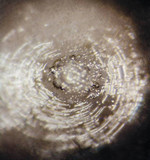
Many crystal pics later, Masaru’s young researcher came up with an idea to expose water to music.  Mother called my music ‘noise’ and today you can call it ‘garage’ or ‘house’ or ‘shed’ (my daughter assures me there is no ‘shed’) but all music can be classified as ‘vibration’.  After much trial and error, Masaru and Co. found that the best way for water to sense this vibration was simply to place the bottle between two speakers.  The results were astonishing.  Water exposed to beautiful classical music produced equally beautiful and well formed crystals while heavy metal that rocked with foul language, yielded only deformed crystals, implying that water responded less to sound than to the lyrics within it.

They then exposed water to words by writing ‘Thank you’ and ‘You fool’ on separate bits of paper which were then pasted onto the bottles but facing ‘in’, so that the water could ‘read’.

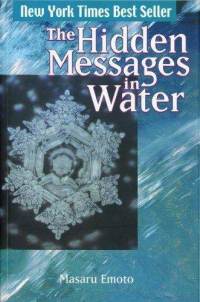
You may wonder at this juncture whether we’re heading into Monty Python territory.  I mean we’ve had bottles of water listening to music and now we’re expecting them to ‘read’… We can’t even achieve that with many of today’s kids!  Yes, it sounds completely ludicrous and implausible but it’s all set out in Dr Emoto’s gem of a book ‘The Hidden Messages in Water’ (Beyond Words Publishing Inc.): how the written word also sends out a vibration which water can detect and surprise, surprise, positive phrases such as ‘Thank you’ and ‘I’m sorry’ will yield perfect crystals whereas ‘I hate you’ literally breaks down the water structure to produce grotesque shapes instead.

Negative words, you see, have the capacity to destroy.

Of course these words were originally written in Japanese but ‘Thank you’ in any language has the same positive vibration which is what Masaru discovered in his research.  Later on, he visited a Junior School and got children to say “You’re beautiful” either a few times or several times to different samples of water.  The more times, the more perfect the crystal!  Interestingly, the water that was ignored produced a rather incomplete crystal.

In all these experiments, Masaru found that the most flawless crystal came about when water was shown the words ‘Love and Gratitude’.  ‘Love’ by itself was wondrous but ‘Love and Gratitude’ was unparalleled.  Later, water previously ‘wrapped’ in ‘love and gratitude’ was exposed to a computer, microwave radiation, a mobile phone and a TV programme, with startling results.  This water was actually able to, partially or wholly, resist their damaging influences, unlike the distilled water also used in this trial.  He next presented his bottles with photos of natural beauty such as waterfalls, rainforests, mountain ranges and our Sun.  The resultant crystals are some of the most stunning in the book.

Masaru also discovered that water can be transformed by chanting and at the end of the last century, he created an opportunity not only to pray for world peace but also to clean up Lake Biwa, Japan’s largest lake, some 40 miles long (that’s 62kms to you youngsters).  Funny that metrication doesn’t extend to newborn babies.  We continue to weigh them in pounds and ounces yet market traders have been prosecuted for doing likewise with vegetables!  But an 8lb baby actually means something to us… its equivalent 3.62874kg doesn’t quite have the same ring to it!  Anyway, back to the event around the lake which was presided over by Nobuo Shioya*, a man whom Masaru regarded as his master.  Nobuo understood the sheer power of words and was unremarkably active and healthy for his very advanced years.  So the chanting of 350 odd people (no, they weren’t odd, though some may think so!) was carried round the entire lake and one month later, reports came in that…

…there were no signs whatsoever of the foul smelling algae that had for years scummed its surface.

But this book expounds far more than these experiments.  For instance, Dr Emoto begins by asking whether we’re happy, whether we bounce out of bed in the morning, eager to start our day.  He discusses the chaos in our world and we wonder what bearing this has on ice crystals.  It is a book of startling revelations especially when you realise, if you haven’t done so already, that if words and thoughts and music can do this to water, imagine what they can do to ourselves.  Wow!

On another note: Saying grace before a meal makes sense then… I try to remember to address any food or drink with the words “I love you”… spoken/whispered with conviction and reverence… NB No dead animals on my plate!  Yes, it seems strange at first but makes what we ingest healthier for our bodies and I am aiming to live to 100+ remember… (you’ll need to refer to my previous blog!)

*Nobuo Shioya was born in 1902!  Yes, do the maths.  A lot of fascinating stuff online about this amazing man.


COPYRIGHT FOR WORDS / IMAGES:

ALL (5) photographs of the water crystals plus the cover of the book ‘The Hidden Messages in Water’ by Dr Masaru Emoto are published with permission of the Office Masaru Emoto LLC… Thank you, Hiro.

Permission granted from Betsy Chasse, co-creator of ‘What The Bleep (Do We Know)’, for my adapted use of these well-known words which featured in a scene from this life-changing film:

“Makes you wonder, doesn’t it? If thoughts can do that to water, imagine what our thoughts can do to us.”

Thank you so much, Betsy, and good luck with your movie ‘Killing Buddha’.